
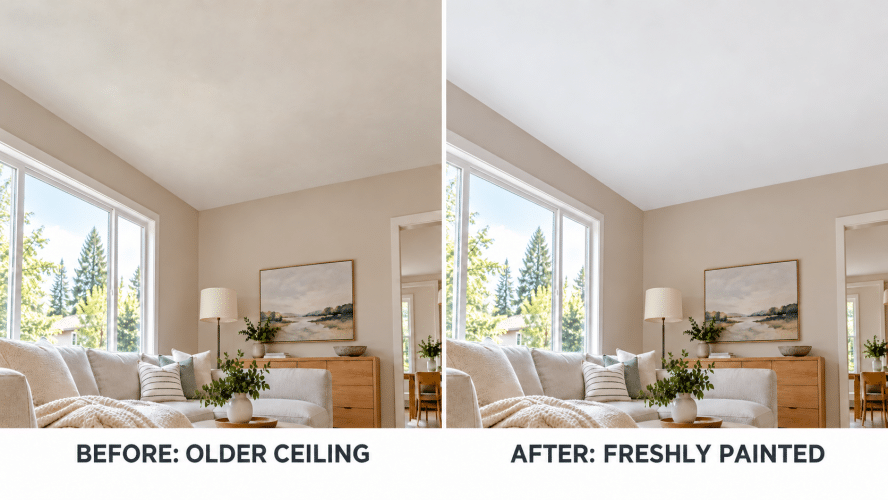
You have chosen a new wall colour and are ready to freshen up a room. Then you look up. Should the ceiling be part of the painting project too?
Not every wall repaint needs a ceiling repaint. If the ceiling is clean, evenly finished and works with your new colour, leaving it alone can be a sensible choice. If it looks yellowed, stained or patchy, painting the walls may make those problems more noticeable. Here is what to consider before deciding on the scope of your next interior painting project.
Signs Your Ceiling Could Use Fresh Paint
Look at the ceiling in daylight and with the room’s lights on. Stand near the doorway as well as underneath it. Light from a window can reveal marks that are easy to miss from another angle.
It is worth including the ceiling when you notice:
- Discolouration: Yellowing, smoke marks or a generally dull appearance.
- Visible repairs: Drywall patches, filled holes or touch-ups that do not blend with the surrounding finish.
- Uneven paint: Roller lines, shiny areas or a patchwork of different whites.
- Surface damage: Dings, cracks, peeling or other areas that need assessment and preparation before painting.
Water stains need special attention. The source of the moisture must be identified and corrected, and the affected area allowed to dry, before painting begins. Appropriate repairs and stain-blocking primer may then be needed. Fresh paint alone will not solve an active leak.
When You Can Leave the Ceiling Alone
A ceiling does not need painting simply because the walls are changing colour. If its finish is sound, there are no noticeable stains or repairs, and you are happy with how it looks, a walls-only repaint may be all the room needs.
This is especially worth considering when the ceiling was painted more recently than the walls. There is no need to repaint a good surface just to make the entire room the same age.
Make the decision room by room. A marked kitchen ceiling and a clean bedroom ceiling do not necessarily need the same work.
Fresh Walls Can Change How an Older Ceiling Looks
A ceiling that seemed white beside the old wall colour can look creamier or greyer beside a new one. That contrast is easier to spot when switching from a warm colour to a cooler white or a lighter neutral.
Before committing, hold a large painted sample of your proposed wall colour near the ceiling line. Check it at different times of day. The ceiling does not have to be a brilliant white, but the two surfaces should look intentional together.
Why Ceilings Are Usually Painted First
When both surfaces are included, the ceiling is generally painted before the walls. This lets the overhead preparation and painting happen before the new wall finish is completed, and helps achieve a clean line where the two meet.
Combining the work also means planning the room protection together. Floors, furnishings, windows and fixtures still need careful covering or masking, even if the walls are being repainted afterwards.
If you decide to paint the ceiling later, it can still be done. It simply requires protecting the finished walls and setting up the room again. Discussing ceilings at the start of an interior painting project helps avoid that extra disruption.
The Ceiling Texture Matters
Smooth ceilings, stipple, popcorn and knockdown textures need different preparation and application decisions. A method that suits one surface may not suit another.
Spraying can provide even coverage on a textured ceiling, while rolling or spraying may be appropriate for a smooth ceiling. The condition of the texture, existing coatings and surrounding room all matter. Older or fragile texture should be assessed before it is disturbed.
A flat finish is often chosen to reduce glare and make minor imperfections less noticeable. Paint cannot, however, replace necessary repairs. Our ceiling painting service starts with assessing the surface and choosing a suitable approach.
Make Sure the Written Quote Is Clear
Before booking, confirm whether the quote includes walls only or ceilings as well. It should identify the rooms and surfaces, agreed repairs, priming where required, paint finishes and room protection. If a ceiling continues into another space, ask where the work will stop.
For Calgary homeowners who are unsure, the best starting point is a look at the actual ceiling, not an automatic yes or no. Request a painting estimate from Paysons Painting and let us know you would like to discuss whether the ceilings should be included.